If Your Empire Home Still Has Foil Flex Dryer Hose, Replace It Now
The white plastic or foil hose in older Empire laundry rooms is no longer code, and it's a genuine fire hazard. Here's why, and how easy it is to fix.
The Fire Hazard Sitting Behind Your Dryer
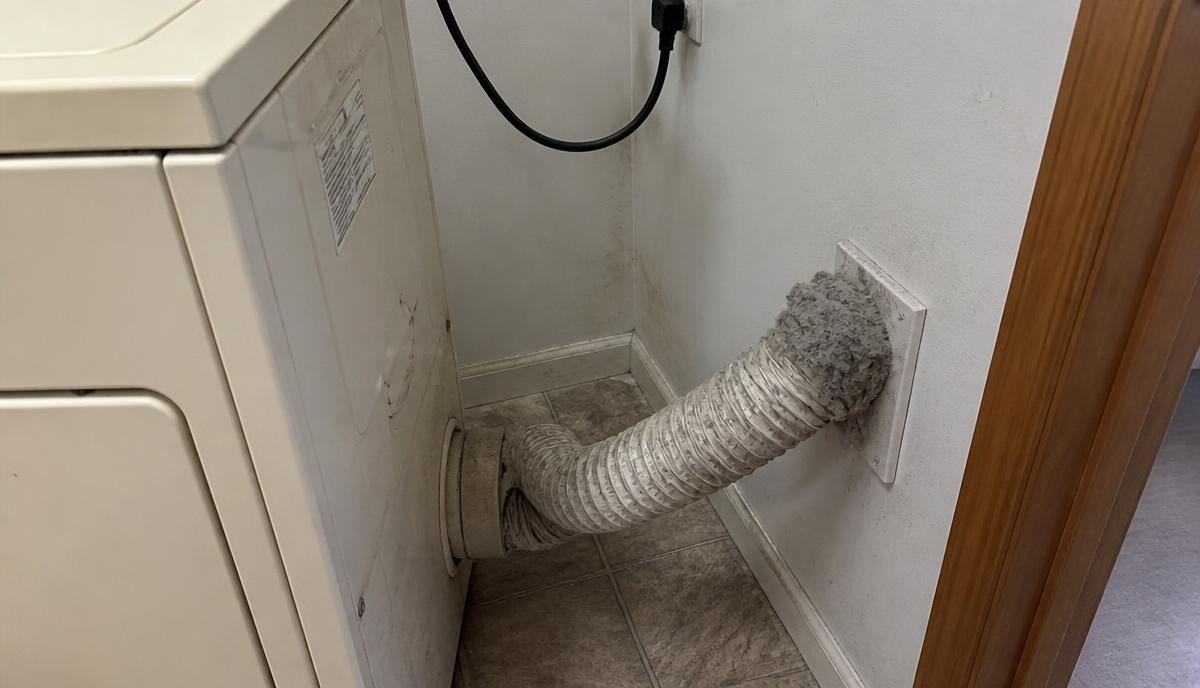
Walk into the laundry room of most Empire homes built before about 2000 and there's a decent chance; you'll find a length of white plastic or foil hose connecting the back of the dryer to the wall vent. That hose is called transition duct, it was standard for decades, and it's no longer allowed under current building code for one simple reason: it catches fire. Homeowners who finally look into dryer vent cleaning in California after noticing painfully slow drying times are often surprised to learn the real culprit isn't the dryer itself, but the decades-old hose sitting right behind it.
It's an easy thing to miss, precisely because it's been there the whole time and nothing about it looks obviously broken. The hose isn't torn, it isn't visibly damaged, and the dryer still runs just slower than it used to, a change gradual enough that most households simply adjust to it rather than question why.
That gradual decline is part of what makes this particular hazard so easy to live with for years without ever addressing it. Nobody wakes up one day to a dryer that suddenly refuses to work instead, drying times creep upward a few minutes at a time over months or years, and by the time a load takes twice as long as it should, it's been happening so gradually that it just feels normal. The hose behind the dryer, meanwhile, keeps quietly accumulating the exact conditions a fire needs.
What the Code Actually Says
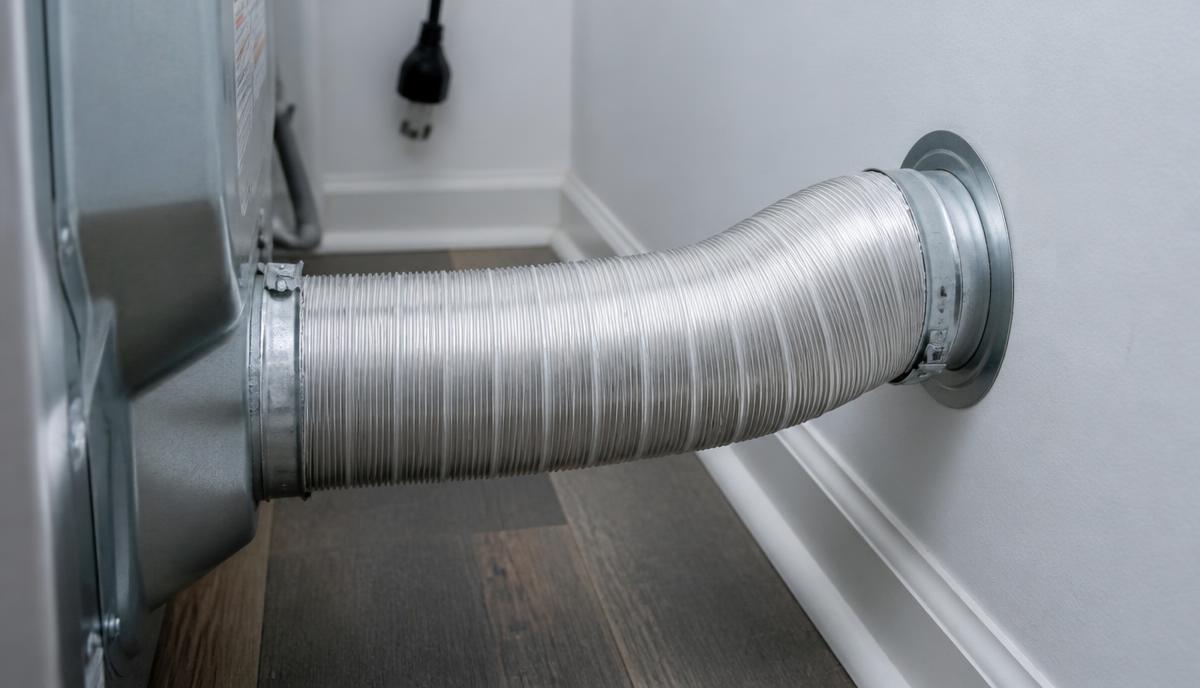
The 2009 International Residential Code, which California has adopted in updated form, requires that transition duct between the dryer and wall vent be either smooth-walled metal or a UL-listed semi-rigid metal hose. The reasoning is straightforward: the ribbed interior of the old white plastic and foil hoses is essentially a built-in lint trap. The U.S. Consumer Product Safety Commission's own dryer fire safety guidance specifically recommends replacing plastic or foil accordion-type ducting with rigid or semi-rigid metal duct, since the flexible plastic or foil type traps lint more easily and is more susceptible to the kinks and crushing that can severely restrict airflow. The CPSC separately estimates a yearly average of thousands of clothes dryer fires nationwide, with restricted airflow and lint buildup consistently cited among the leading contributing factors.
Duct Material
Current Code Status
Primary Fire Risk
White plastic / vinyl hose
Explicitly banned
Melts and ignites easily; ribbed interior traps heavy lint
Foil flex hose
Heavily restricted
Ridged surface traps lint; crushes easily behind the dryer
Semi-rigid or rigid metal duct
Code-compliant
Smooth interior resists lint buildup and holds its shape
Why “Legal When Installed” Doesn't Mean Safe Now
The code change doesn't apply retroactively, which is exactly why so many Empire homes still have the old hose in place. It's not that these homes are out of compliance — the original installation was perfectly legal at the time, and nobody has had a reason to touch it since. But legal-when-installed doesn't mean safe-now. Dustbusters routinely pulls old white plastic hose out of Empire laundry rooms so packed with lint that airflow is down as much as 80%, a level of restriction most homeowners have no way of noticing just by looking at the hose from the outside.
That gap between “legal at the time” and “safe today” is worth sitting with for a moment. Building codes get updated because real incidents and real research reveal problems that weren't understood, or weren't taken seriously enough, when the original standard was written. A hose that met every requirement in 1995 can still be sitting in a wall today, technically grandfathered in, while quietly representing exactly the hazard the newer code was written to eliminate.
The Other Old Part Nobody Checks: The Vent Cap
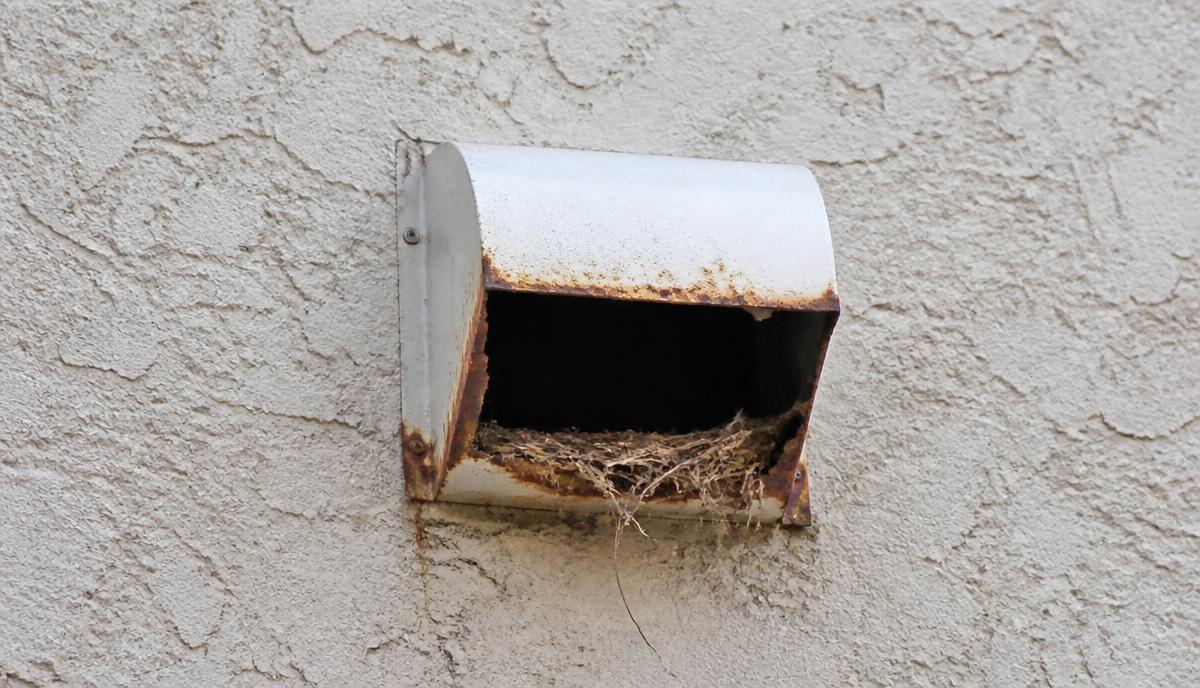
While the transition hose gets most of the attention, the exterior vent cap on older Empire homes deserves just as much scrutiny. Many of these caps have rusted through, lost their flap entirely, or been colonized by birds looking for a sheltered nesting spot. A vent cap with a missing or stuck flap leaves the vent pipe open to weather and animals year-round, and technicians have found everything from rats to swallow nests in the first few feet of vent pipe inside a wall cap. That's a fire risk and a pest problem happening in the exact same spot at the same time.
The two problems compound each other in a way that's easy to overlook. A compromised vent cap lets moisture and nesting material into the duct system, which then mixes with accumulated lint to create an even denser blockage than lint buildup alone would cause. Checking the transition hose without also checking the exterior termination point only tells half the story of what's actually restricting airflow through the system.
What a Full Vent Service Actually Involves
A proper vent inspection on an older Empire home follows a consistent sequence: pull the dryer away from the wall, inspect the transition hose and replace it if it's out of code, clean the rigid pipe running through the wall or attic with a rotary brush, vacuum out all the loosened material, inspect the exterior cap and replace it if it's failed, and finally verify exit airflow to confirm everything is genuinely clear. The whole process takes about 45 minutes, and dryers that had been running 90-minute cycles are often back down to around 40 minutes per load by the time the technician packs up.
Service Step
What It Addresses
Pull dryer, inspect transition hose
Identifies out-of-code material and crush points at the source
Replace hose if needed
Restores full airflow and code compliance in about 10 minutes
Rotary brush the rigid pipe
Clears lint accumulated through the wall or attic run
Vacuum loosened material
Removes debris the brush dislodges rather than leaving it behind
Inspect and replace exterior cap
Closes off the vent to weather, birds, and rodents
Verify exit airflow
Confirms the whole system is genuinely clear end to end
The Drying Time Difference Is the Easiest Way to Tell
Energy savings from a properly cleaned and updated dryer vent are easy to see once the fix is in place, and drying time is the most obvious proof. A dryer running half as long uses roughly half the electricity for that load, which adds up meaningfully over a household doing eight to ten loads a week. Customers who finally get the old white plastic hose replaced are usually genuinely surprised at how much faster the very next load dries.
Condition
Typical Drying Time per Load
Old, crushed, or lint-packed transition hose
Around 90 minutes per load
Replaced hose with a fully cleared vent system
Around 40 minutes per load
An Easy Fix with No Reason to Put It Off
This is one of those rare home safety issues where the fix is genuinely simple and inexpensive compared to the risk it eliminates. Dustbusters services Empire as part of its regular route, with no travel fees and the same pricing as the larger surrounding towns. If a laundry room still has the old white plastic or foil flex hose, a standard vent cleaning appointment includes swapping it out as part of the visit — no separate trip, no upsell, just a fire hazard removed while the technician is already there.
For a fix this straightforward, the only real cost of waiting is time every load of laundry run through an old, restricted hose is another cycle spent quietly stressing a dryer that was never designed to work that hard, on a hazard that takes about ten minutes to eliminate for good.
Key Takeaways
White plastic or vinyl transition duct is banned outright under current building code, and foil flex hose is heavily restricted, for one simple reason: it catches fire.
Because code changes don't apply retroactively, plenty of Empire homes built before 2000 still have the old hose in place, legal when installed but no longer safe today.
Dustbusters routinely pulls old white plastic hose out of Empire laundry rooms so packed with lint that airflow is down as much as 80%.
Replacing the transition hose with modern semi-rigid aluminium duct adds about ten minutes to a standard vent cleaning and often cuts drying time dramatically.
A failed or missing exterior vent cap is a second overlooked hazard in older Empire homes, leaving the vent open to weather, birds, and rodents year-round.
Still Have the Old Hose Behind Your Empire Dryer?
We'll inspect the transition duct, clean the full vent run, and swap out-of-code hose during the same visit. Get on the schedule in a couple of minutes.
Foil flex hose is heavily restricted under current code because its ridged interior traps lint far more easily than smooth-walled duct, and it crushes easily when a dryer gets pushed back against the wall. While not banned outright everywhere the way white plastic hose is, most professionals recommend replacing it with semi-rigid or rigid metal duct for meaningfully better safety and airflow.
How do I know if my dryer's transition hose needs to be replaced?
+
The clearest sign is drying time: if a normal load suddenly takes noticeably longer than it used to, or the dryer or hose feels unusually hot during a cycle, the transition duct is likely crushed, kinked, or clogged with lint. Visually, any white plastic, vinyl, or ribbed foil hose behind the dryer is worth replacing regardless of how it's currently performing, since it's a recognized fire hazard on its own.
Can white vinyl dryer hose actually start a house fire?
+
Yes. White vinyl and plastic dryer hose is flammable and can melt or ignite when exposed to the high heat a dryer produces, especially once lint has built up inside the ribbed interior. This is exactly why the material is explicitly banned under current residential building codes and by virtually all dryer manufacturers.
How often should a dryer vent transition hose be replaced?
+
There's no fixed replacement schedule, but any home still using white plastic or vinyl hose should replace it immediately regardless of age, since the material itself is the hazard. For homes already using code-compliant semi-rigid or rigid metal duct, replacement is generally only needed if the hose becomes damaged, crushed, or shows visible wear during a routine vent cleaning inspection.
Ready to schedule in Empire?
Same-week appointments available. Honest quote up front.