All posts
Crows Landing, CA 6 min read
Why a Long Dryer Vent Run Can Become a Fire Risk in Crows Landing
A practical guide for homeowners with long, winding or hard-to-reach dryer vents

A practical guide for homeowners with long, winding or hard-to-reach dryer vents
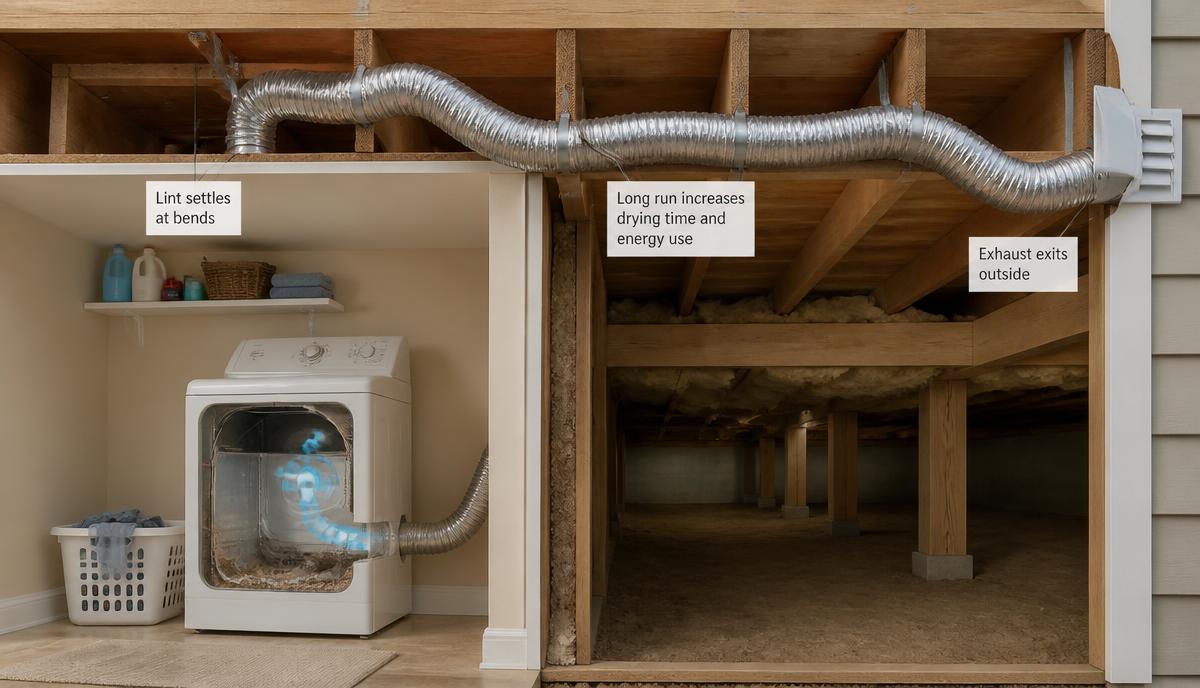
A dryer can look perfectly normal from the laundry room while having a very different story inside its exhaust duct. That is especially true in homes where the laundry area sits far from an exterior wall. Instead of a short path straight through the wall, the exhaust may travel across a ceiling, through a crawlspace or attic, around framing and finally outside.
For homeowners in Crows Landing, that hidden route is worth understanding. A long run does not mean your dryer is unsafe by definition. The concern is what happens when lint, dust, crushed ducting or an obstructed vent cap gradually reduces the airflow the appliance needs.
For homeowners dealing with a longer or harder-to-reach exhaust route, dryer vent cleaning in California can help keep the full exhaust system clear and operating properly.
Cleaning the lint screen after every load is one of the easiest dryer-safety habits, but it should not be confused with cleaning the exhaust system. Fine lint can still enter the duct. Over time, deposits can collect at bends, joints and places where the duct sags or airflow slows.
The Consumer Product Safety Commission explains that lint buildup in the dryer or exhaust duct can restrict airflow, increase heat and contribute to fires. It also recommends periodic cleaning of the dryer vent and exhaust duct and checking that air is escaping from the outside vent.
For additional homeowner guidance, review the CPSC dryer safety alert.
Think about the difference between blowing air through a short straw and pushing that same air through a long tube with several turns. The longer and more complicated the route becomes, the more important the condition of the ductwork is.
A long run can have several potential trouble spots: a sharp elbow, a crushed transition section behind the appliance, a low spot where lint settles, a disconnected joint or an exterior cap that is partially blocked. None of these problems is necessarily visible from the laundry room.
This is why simply cleaning the area immediately behind the dryer may give a homeowner a false sense of security. The question is not just, 'Is the dryer clean?' It is, 'Can the warm, moisture-laden air travel all the way outside without unnecessary restriction?'
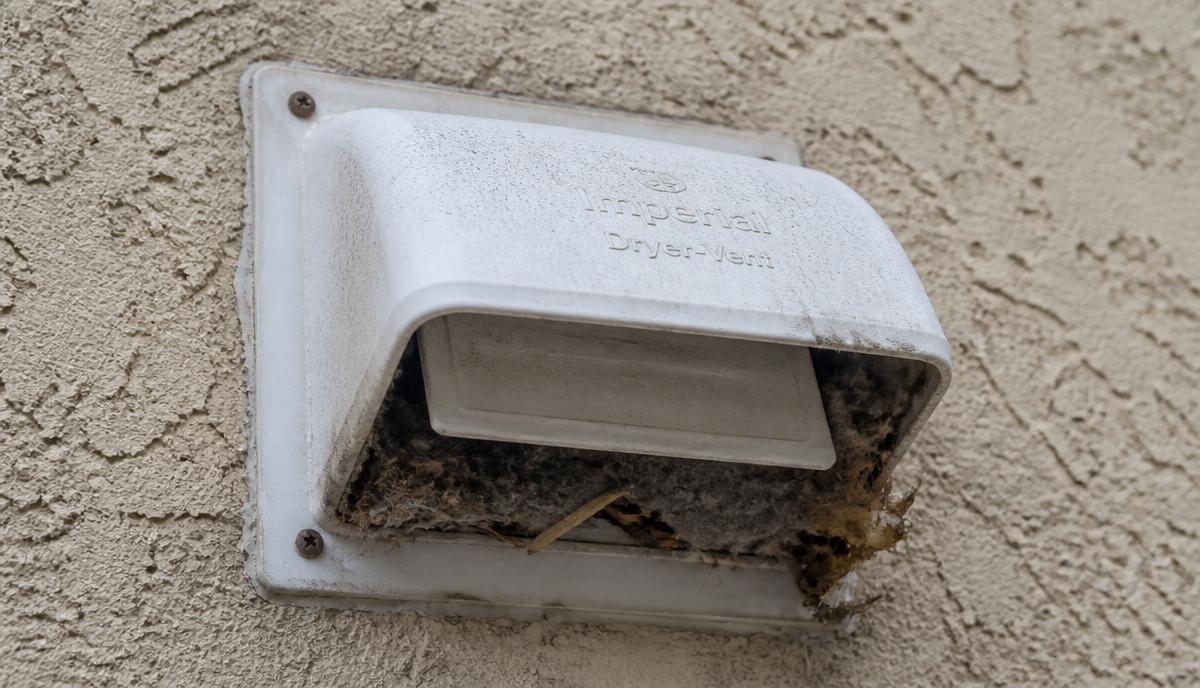
The final few feet of the system can be just as important as the first few. The exterior termination is where exhaust leaves the home, so a blocked or damaged cap can interfere with the entire system.
Outdoor vents can collect lint, leaves and other debris. Depending on the location, birds can also create nests near an opening. A termination that is difficult to reach may go unnoticed for months because homeowners rarely have a reason to inspect it.
The U.S. Fire Administration's appliance and electrical safety guidance highlights cleaning and maintenance as important parts of reducing appliance fire risk.
These signs do not automatically identify the exact cause. Appliance problems, airflow restrictions and duct defects can produce similar symptoms. But they are good reasons to stop treating longer drying times as 'just how this dryer works.'
National safety data gives homeowners a useful reason to take maintenance seriously. USFA reports that failure to clean accounted for 31% of the leading factors contributing to ignition in home clothes-dryer fires from 2018–2020.
| Data point | Figure | Why it matters |
|---|---|---|
| Failure to clean | 31% | Leading contributing factor cited by USFA for 2018–2020 home clothes-dryer fire ignition data. |
| Historical dryer fires | ≈6,400/year | CPSC has cited a yearly average estimate in its safety messaging. |
| Historical injuries | ≈180/year | CPSC estimate associated with those dryer fires. |
| Historical property damage | ≈$105 million/year | CPSC estimate associated with those dryer fires. |
The CPSC figures are historical estimates used in its safety education; they should not be read as a current annual count. The maintenance lesson remains straightforward: keep the lint screen clean, keep the exhaust path clear and investigate changes in dryer performance.
| Consideration | Short/simple route | Long/complex route |
|---|---|---|
| Access | Usually easier to inspect | May pass through hidden spaces |
| Bends | Often fewer | More opportunities for airflow resistance |
| Lint buildup | Typically easier to locate | Can accumulate in less-visible sections |
| Exterior termination | Often close to laundry area | May be distant or difficult to reach |
| Inspection needs | Basic checks may reveal issues | Full-path inspection is more useful |
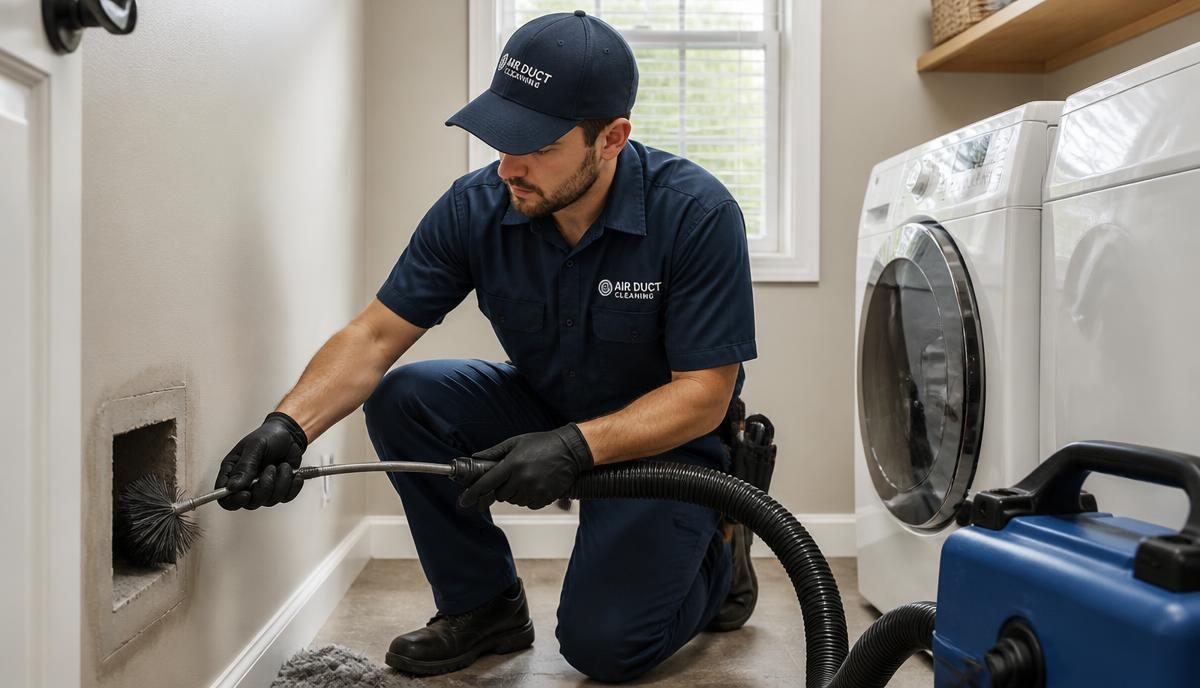
A useful service should look beyond the lint screen. The technician should consider the dryer-side connection, the accessible duct route, bends, possible restrictions and the exterior termination. Where the configuration allows, the duct should be cleaned using equipment appropriate for its length and layout.
The goal is not simply to pull out a visible handful of lint. The goal is to improve the condition of the exhaust path and identify problems that cleaning alone cannot solve. A crushed or poorly routed section, for example, may need repair or rerouting rather than repeated cleaning.
With the dryer running normally, go outside and locate the exhaust termination. You should be able to feel warm air leaving the vent. If airflow seems unusually weak or the flap barely moves, do not assume the dryer is simply getting old. The restriction may be somewhere between the appliance and the outside.
Also pay attention to changes over time. A dryer that used to finish a normal load efficiently but now needs multiple cycles is giving you a useful maintenance clue. If the dryer becomes unusually hot or produces a burning odor, stop using it and have the appliance and exhaust system checked.
There is no single schedule that fits every home. Frequency depends on dryer use, the length and layout of the exhaust route, the condition of the duct, household lint production and previous maintenance. For a long or complicated run, an annual inspection is a sensible maintenance baseline, with earlier attention whenever warning signs appear.
If you have recently moved into a home and do not know when the vent was last cleaned, that is another good reason to have the system evaluated. You are not just maintaining the appliance; you are learning what is hidden behind the walls and ceilings.
Most homeowners think about the dryer itself: the drum, controls, lint screen and drying cycle. The exhaust duct deserves the same attention. In a Crows Landing home with a long route to the exterior, keeping that path clear can support better airflow and reduce one preventable source of dryer-related fire risk.
If your dryer has a long run, several bends, difficult exterior access or a history of slow drying, professional attention can be worthwhile. The right service should give you a clearer picture of the system rather than simply selling a routine cleaning.
For professional help with long or difficult dryer exhaust systems, Dustbusters provides dryer vent cleaning and inspection services for homeowners in the Central Valley.
A practical baseline is to have the exhaust system inspected and cleaned periodically, with annual attention being a sensible starting point for many homes. Long runs, heavy dryer use and recurring airflow problems may justify more frequent service.
Yes. A long or restricted exhaust path can reduce airflow, which can make the dryer less efficient and increase drying time. Longer cycles are a useful reason to investigate the vent rather than simply adding more time to each load.
Common clues include longer drying times, weak airflow at the outside termination, unusual heat, a burning odor or lint around the exterior vent. These signs can have multiple causes, so a proper inspection is the safest way to identify the restriction.
Yes. Leaves, lint and animal nesting material can interfere with the exterior termination. Check that the outlet can open and exhaust properly while the dryer is operating, and arrange professional inspection if airflow appears restricted.
Same-week appointments available. Honest quote up front.