Empire Homes Get Overlooked. Their Ducts Tell the Story.
Empire is too small for most franchise duct companies to bother with. The result: some of the dirtiest duct systems in Stanislaus County, decades in the making.
Key Takeaways
Empire is small enough that most franchise duct companies skip it entirely, which means some homes here have never had a professional duct cleaning in 30, 40, or even 50 years.
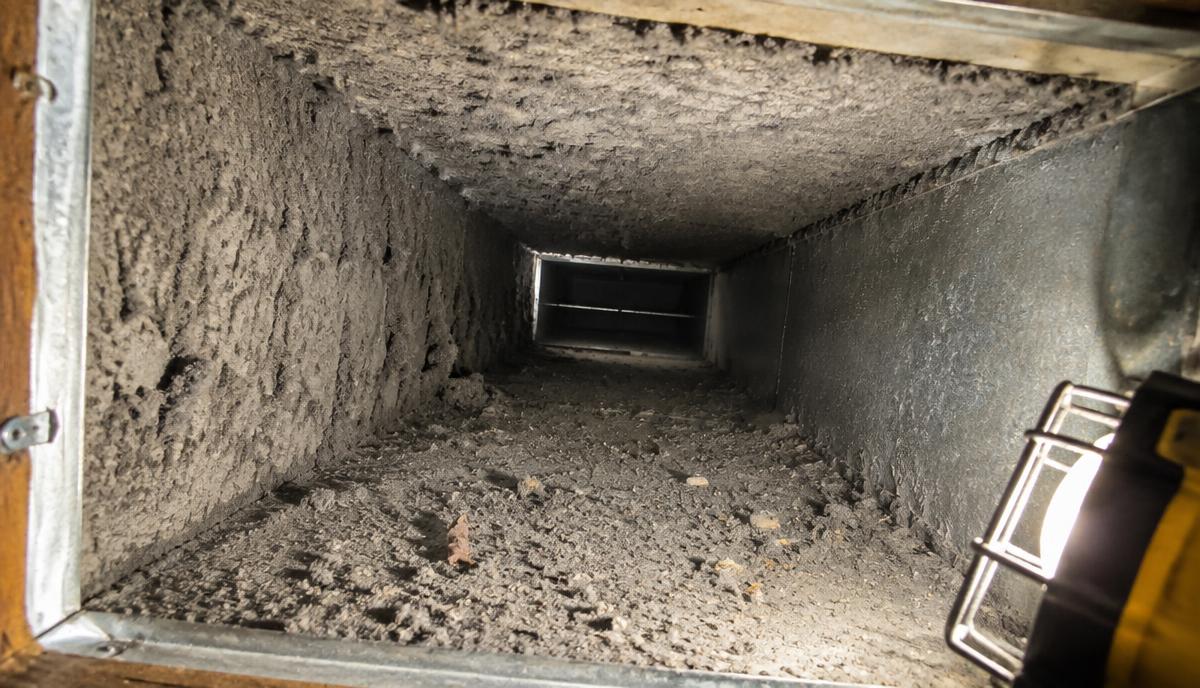
A first cleaning in a home like that reveals literal layers construction-era materials at the bottom, decades of household dust, ag residue, and pollen stacked on top.
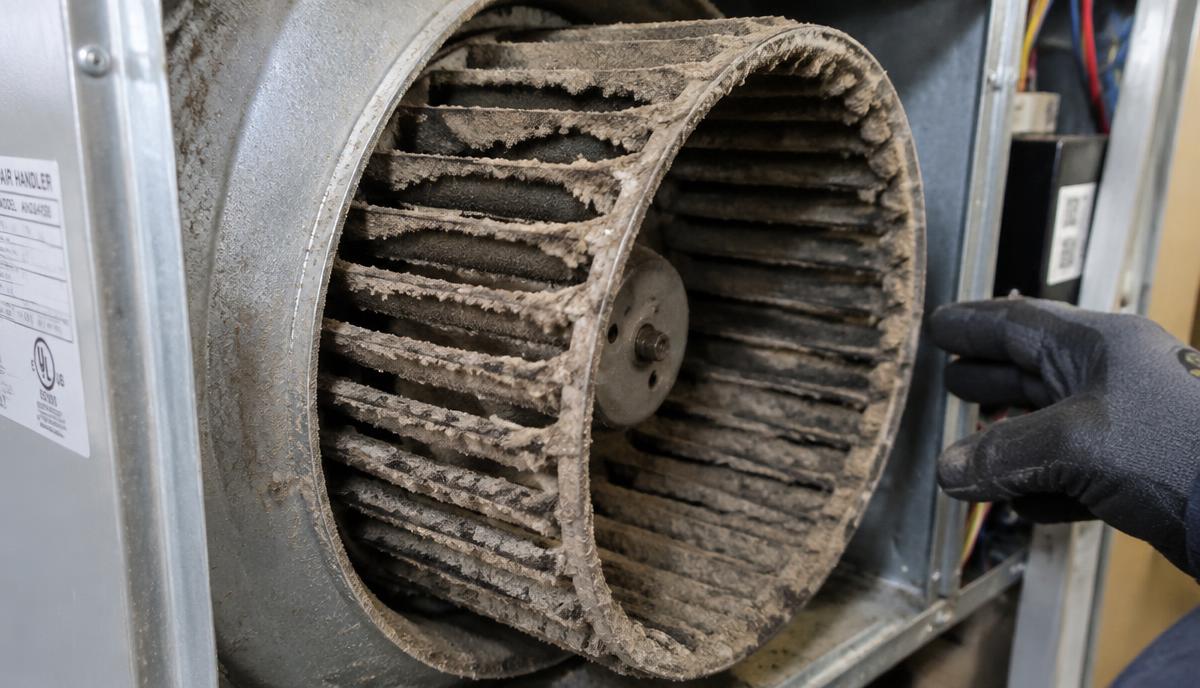
Blower wheel buildup as thick as an eighth of an inch is common in these systems, and it's often the real reason behind years of “my A/C isn't keeping up” complaints.
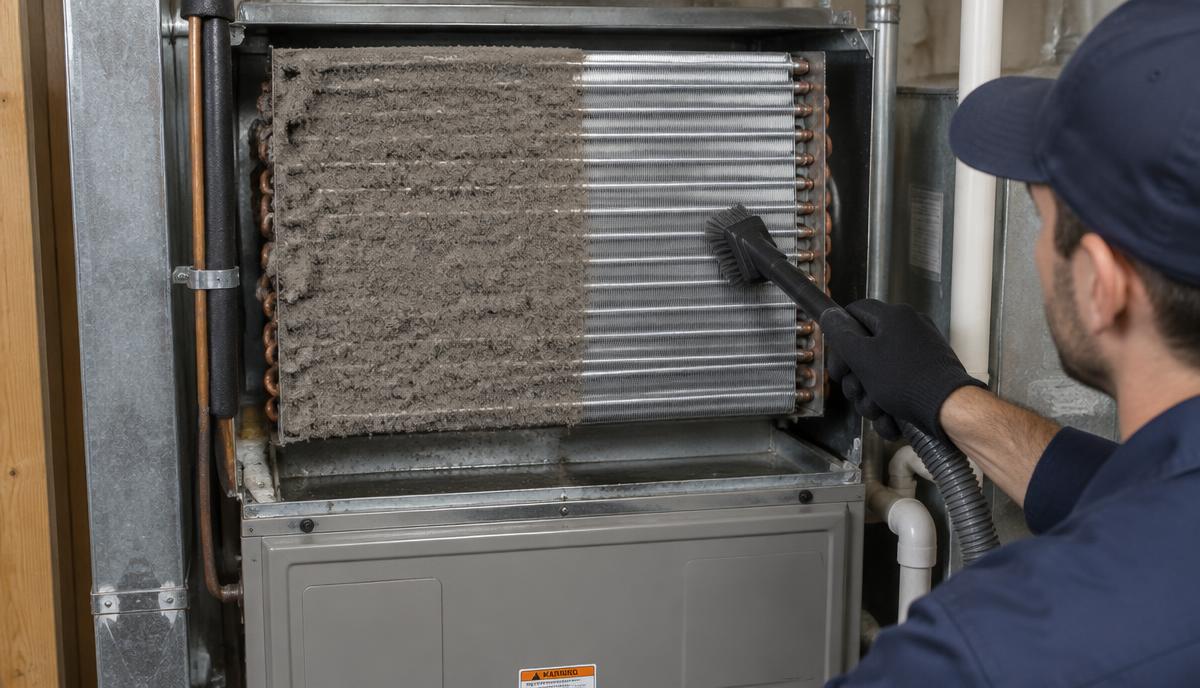
A dust-covered evaporator coil can lose a meaningful share of its heat-transfer capacity, according to ASHRAE and DOE research, which shows up directly as longer cooling cycles and higher summer PG&E bills.
Industry standards call for cleaning the entire HVAC system, not just the visible ductwork, since leaving any component untouched lets it quickly recontaminate everything else.
Why Empire's Ducts Are Some of the Dirtiest We See
Empire doesn't show up on most service-area maps. It's small, tucked between Modesto and Oakdale, and the big franchise duct companies simply don't bother sending trucks out here. The result of that neglect is predictable once you've seen it a few times: some of the dirtiest duct systems in the county, sitting quietly in homes whose owners have never once had reason to think about what's actually inside their ductwork. Anyone researching HVAC services in California after finally noticing weak airflow or a musty smell in an Empire home is usually about to discover exactly how much has accumulated in a system left completely untouched since the day the house was built.
Most of Empire's housing stock is older single-family construction on larger lots, with original HVAC infrastructure that's been patched, replaced piece by piece, and otherwise left alone for decades. The duct systems themselves are typically a patchwork original metal trunk, branches swapped out for flex duct at some point, plus whatever the most recent A/C installer added or modified along the way. Sealing was rarely done well to begin with, exterior duct insulation is often crushed or missing in spots, and nothing has ever been physically pulled out from inside.
It's worth pointing out that none of this is really the fault of the homeowners living in these houses today. Most people simply never think about duct cleaning unless something prompts it a musty smell, a spike in the electric bill, a family member's allergies acting up more than usual indoors. Without that trigger, a duct system can go an entire lifetime of homeownership without ever coming up in conversation, let alone getting inspected.
What Decades of Neglect Actually Looks Like Inside a Duct
Opening up a return air drop on a home like this reveals something closer to an archaeological site than a maintenance issue. There are genuine layers: decades of household dust on top, then a stratum of pollen and ag residue underneath that, then older deposits going all the way back to construction-era materials at the bottom. Technicians have pulled out insulation fibres from work done in the 1980s, paint overspray from interior repaints in the 1990s, and pet dander from animals that were already gone by the time the current owner moved in. All of it has been sitting inside the system the entire time, quietly recirculating into the living space every time the HVAC runs.
Layer Found
Approximate Era
What It Tells You
Construction-era debris
Original build date
Never once cleaned since installation
Insulationfibres
1980s renovation work
A remodel or repair job left material behind
Paint overspray residue
1990s interior repainting
Airborne particles settled and never cleared
Household dust and pet dander
Recent decades to present
Ongoing recirculation with each HVAC cycle
The Blower Wheel: Where Airflow Problems Actually Start
The blower wheel is usually the worst part of the whole system. It's a centrifugal wheel with curved blades that throws air down the supply trunk, and dust adheres to the leading edge of every single blade as it spins. Over decades, that buildup can reach an eighth of an inch thick, which dramatically reduces the wheel's ability to actually move air through the ductwork. A lot of “my A/C isn't keeping up” complaints heard around Empire trace directly back to a blower wheel that hasn't been cleaned in the entire lifetime of the home not a failing compressor, not a low refrigerant charge, just decades of dust physically blocking the equipment from doing its job.
The Evaporator Coil: Where the Utility Bill Actually Suffers
The evaporator coils the cold metal box sitting over the furnace where the air conditioner actually does its cooling work is the other place where buildup quietly destroys performance. Research on dirty evaporator coil performance cites ASHRAE findings that dirty evaporator coils can reduce HVAC system efficiency by 10 to 25%, while the U.S. Department of Energy documents that dirty coil conditions can increase compressor energy consumption by up to 30%. A coil coated in a felt-like layer of dust simply can't absorb heat the way a clean one can, which means longer A/C run times, higher summer PG&E bills, and rooms that never quite cool down even with the system running nearly nonstop. Cleaning the coil is part of every duct cleaning job, not a separate add-on tacked onto the invoice.
Coil Condition
Typical Efficiency Impact
Clean coil
Full heat-transfer capacity; normal run times
Light dust layer
10–25% reduction in system efficiency (ASHRAE)
Heavy, felt-like buildup
Compressor energy use can rise by up to 30% (DOE)
Why the Whole System Has to Be Cleaned, Not Just the Ducts
“Air duct cleaning” is actually a bit of a misnomer, and it's worth understanding why. The National Air Duct Cleaners Association explains that the entire HVAC system needs to be cleaned, not just the ductwork itself, because leaving any single component untouched the blower wheel, the coil, the plenum allows that component to recontamination the rest of the system almost immediately. Cleaning half the system is compared to cleaning half a living room floor: technically progress, but not actually the job. That's exactly why a proper visit addresses the blower wheel and coil alongside the ductwork itself rather than treating them as optional upgrades.
Empire's Specific Air Quality Challenges
On top of decades of internal buildup, Empire homes face a specific combination of outdoor contamination sources that make clean ductwork even more important. Agricultural dust drifts in from the surrounding farms nearly year-round. Ash and smoke show up regularly from agricultural burns and the occasional fire season. And the same Highway 99 and 132 corridor exhaust that affects the rest of Stanislaus County settles here too. None of that goes away on its own, and a clean duct system is what gives an air filter a fighting chance against it a dirty duct system means even a premium filter upgrade can only do so much, since the contamination sitting downstream of the filter keeps recirculating regardless of what's captured on the way in.
Getting an Honest Look at What's Actually in There
Empire gets serviced as part of the regular route no travel fees, the same pricing as Modesto and Turlock, and same-week booking most of the time. The first cleaning on an older Empire home does take longer than average simply because there's more to remove, but the quote is honest upfront with no surprises mid-job. Dustbusters will show homeowners on camera exactly what's inside the system before any cleaning begins, and based on what typically turns up in Empire homes specifically, most people schedule the cleaning immediately after seeing the footage.
For a home that's genuinely never had this done, the first inspection tends to be more informative than most homeowners expect. Seeing the actual buildup on camera, rather than just hearing a description of it, is usually what turns a vague sense that “maybe we should look into that someday” into an appointment on the calendar for that same week.
See What's Actually Inside Your Empire Ducts
Book a camera inspection and full-system cleaning for your Empire home. Same-week appointments, no travel fees, and an honest quote before any work starts.
NADCA's general guidance suggests every 3 to 5 years for a standard home with no pets and no respiratory conditions, shortening to every 2 to 3 years for homes with shedding pets or occupants with allergies or asthma. Homes that have gone decades without a single cleaning, which is common in older Empire properties, should be evaluated as soon as possible rather than waiting for a scheduled interval.
Can a dirty blower wheel really affect how well my AC cools the house?
+
Yes, significantly. The blower wheel is what physically pushes air through the ductwork, and buildup on its blades sometimes as thick as an eighth of an inch in older, never-cleaned systems dramatically reduces how much air it can move. Many long-standing “my AC can't keep up” complaints trace directly back to this specific component rather than a refrigerant or compressor issue.
Does cleaning the evaporator coil actually make a noticeable difference in energy bills?
+
Yes. Research cited by ASHRAE indicates dirty evaporator coils can reduce system efficiency by 10 to 25%, and DOE data shows dirty coil conditions can raise compressor energy consumption by up to 30%. Restoring a coil to clean condition typically shows up quickly as shorter cooling cycles and a more responsive system.
Why would a franchise HVAC company skip servicing a small town like Empire?
+
Franchise operations often prioritize routes that maximize the number of stops per driving mile, and a small, spread-out town can fall outside that efficiency calculation compared to denser nearby cities. Locally based companies that build Empire into a regular route, rather than treating it as a one-off trip, can service the area without the added travel fees or scheduling delays that keep larger franchises away.
Ready to schedule in Empire?
Same-week appointments available. Honest quote up front.