
Key Takeaways
- Dust, pollen, bird droppings, and grime can block sunlight and reduce solar energy production.
- Professional cleaning can restore output when surface buildup is responsible for lost performance.
- Monitor production and inspect panels safely rather than relying on appearance alone.
- Use appropriate cleaning methods to avoid damaging panels or risking injury.
Introduction
Your solar panels can sit in the sunshine all day and still produce less electricity than expected. The culprit might not be a faulty inverter or an aging system. Sometimes, the problem is simply a layer of dust, pollen, bird droppings, or other debris blocking sunlight. Professional solar panel cleaning services in Turlock can help remove stubborn buildup that rain may leave behind. Understanding how dirt affects energy production can help you recognize when cleaning is worthwhile, avoid unnecessary maintenance, and get more from the solar system you already own.
How Does Dirt Reduce Solar Panel Output?
Solar panels convert sunlight into electricity, so anything that prevents light from reaching their photovoltaic cells can reduce their performance. Dust and residue scatter or block incoming sunlight, leaving the panels with less energy to convert.
The impact depends on how much dirt has accumulated, the type of residue, panel angle, weather, and system design. A light dusting may cause little noticeable change, while thick deposits or concentrated bird droppings can create more significant problems.
Research from the National Renewable Energy Laboratory found that panel performance declined by as much as 15% during peak pollen season at studied solar installations. That figure isn't a universal estimate for every home, but it shows why surface buildup deserves attention.
What Builds Up on Solar Panels in Turlock?
In California's Central Valley, outdoor conditions can expose solar panels to several types of residue. Knowing what you're dealing with helps explain why a quick rain shower may not restore performance.
- Dust and agricultural particles: Fine particles can settle across panel surfaces, especially during dry, windy periods.
- Pollen: Seasonal pollen can form a film that rain doesn't always remove completely.
- Bird droppings: These deposits can cling to the glass and block light in concentrated areas.
- Leaves and organic debris: Debris may collect around panel edges and, depending on the installation, interfere with drainage or trap moisture.
- Airborne grime: Nearby roads, construction, and other activity can contribute to persistent residue.
Here's the catch: a panel doesn't need to look dramatically dirty to have a buildup problem. Checking your energy production alongside visual inspections gives you a clearer picture than appearance alone.
How Can You Tell When Cleaning Is Needed?
Your solar monitoring app is one of the most useful tools for spotting a potential performance issue. Compare current production with previous periods that had similar sunlight and weather conditions. A sudden or sustained drop may justify an inspection, although dirt is only one possible explanation.
Watch for these signs:
- Visible dust, pollen film, or bird droppings on the glass.
- Production that remains lower than expected under comparable conditions.
- Long dry spells followed by noticeable surface buildup.
- Nearby construction, dusty activity, or seasonal pollen that increases soiling.
Don't assume every drop in output means the panels need washing. Shading, inverter problems, electrical faults, seasonal daylight changes, and equipment degradation can also affect production. If cleaning doesn't improve performance, ask a solar technician to investigate other causes.
Does Professional Solar Panel Cleaning Improve Energy Output?
Yes, professional cleaning can improve energy output when accumulated dirt is limiting sunlight, but the amount of improvement varies. Cleaning cannot fix faulty equipment or guarantee a specific increase in electricity production.
A professional service can assess the buildup and clean the glass using methods suited to the installation. This matters because abrasive materials, unsuitable chemicals, or rough scrubbing may scratch surfaces or damage protective coatings.
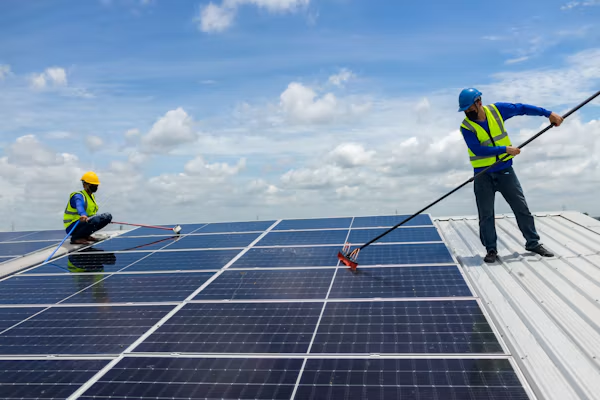
Avoid climbing onto the roof or spraying panels with a pressure washer. Roof access creates fall risks, and excessive pressure or inappropriate cleaning techniques can damage components or seals. Follow your solar manufacturer's maintenance guidance, and use a qualified service when access or cleaning requirements make the job unsafe.
DIY Cleaning vs. Professional Service
The right option depends on access, the type of residue, and your confidence in cleaning the panels safely.
| Consideration | DIY cleaning | Professional cleaning |
|---|---|---|
| Access and safety | May be risky on rooftops | Trained crews can assess access risks |
| Equipment | Requires suitable tools and water | May include specialized cleaning equipment |
| Stubborn residue | Can be difficult to remove safely | Cleaning method can be selected for the buildup |
| Best fit | Accessible panels with light dirt, following manufacturer guidance | Roof-mounted systems, persistent grime, or difficult access |
For homeowners considering home solar panel cleaning in Turlock, the goal isn't to wash panels as often as possible. It's to remove meaningful buildup without creating safety risks or unnecessary wear.
How Often Should Solar Panels Be Cleaned?
There is no single schedule that suits every solar installation. Panels near dusty roads, agricultural activity, or trees may accumulate residue faster than panels in cleaner surroundings. Rain can help rinse loose dust, but it may not remove sticky pollen or bird droppings.
Inspect your panels periodically from a safe location and review production trends. If dirt is visible or output appears unusually low, seek an assessment before arranging a cleaning. This approach helps you avoid paying for unnecessary visits while catching persistent buildup before it becomes a recurring concern.
Professional Solar Panel Cleaning from Dustbusters
If your panels have accumulated stubborn residue, Dustbusters offers solar panel cleaning services in the Turlock area. Its dedicated solar panel cleaning service gives property owners a way to explore professional help with exterior panel maintenance.
When discussing your needs, mention the type of buildup you've noticed, any changes in energy production, and whether the panels are difficult to access. This information can help establish whether cleaning is appropriate and what the service should address.
Clean panels aren't a substitute for routine system monitoring, but sensible maintenance can help prevent avoidable losses when dirt is the cause.